How to Match Your Wedding Veil With Your Dress
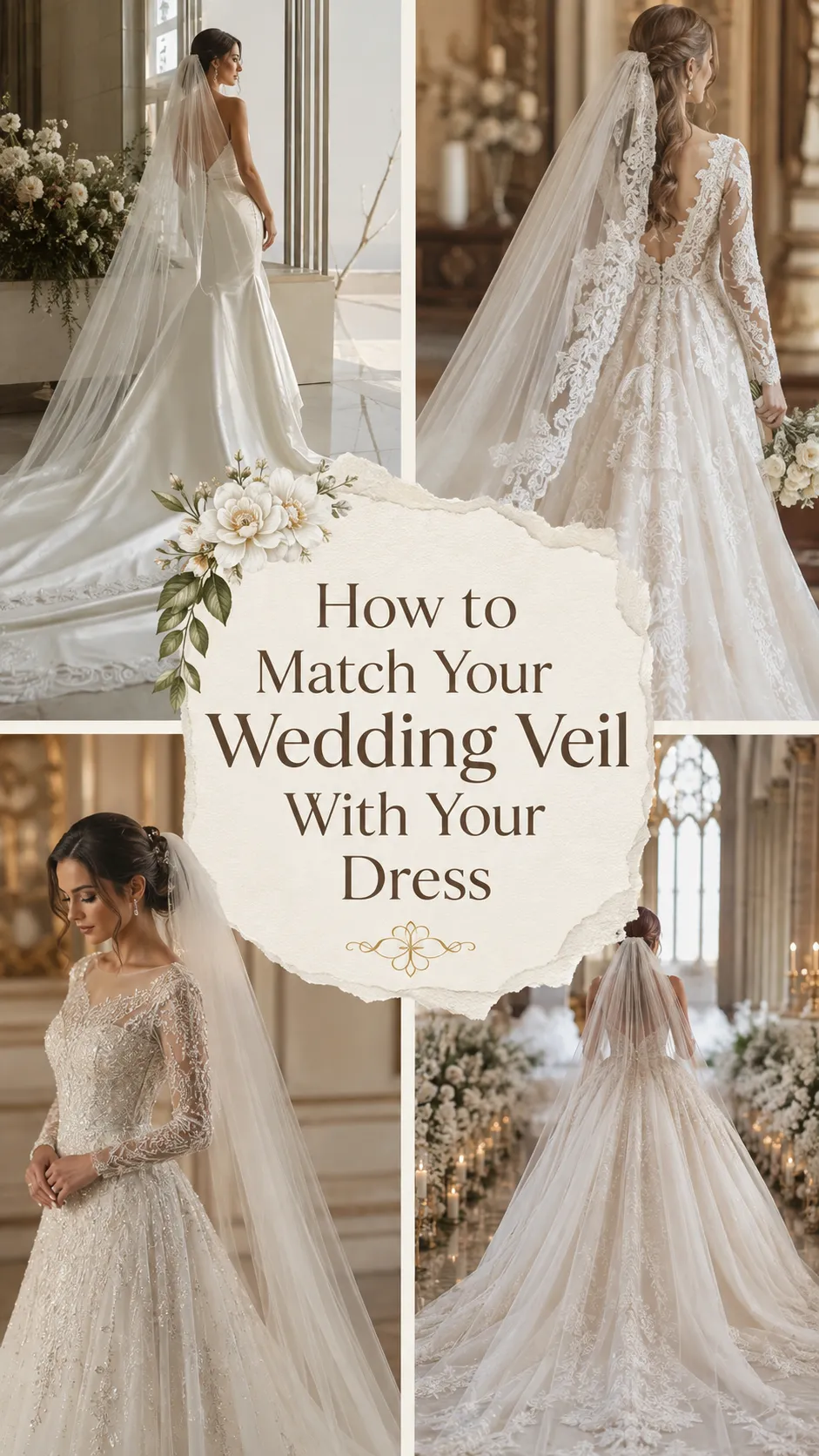
Your wedding veil can completely transform the way your dress looks. The right veil adds movement, romance, and personality, while the wrong combination can hide beautiful details or make the bridal look feel visually crowded.
Matching a veil with your wedding dress isn’t about finding an exact duplicate of every detail. It’s about creating harmony between length, fabric, embellishment, silhouette, and overall bridal style.
Whether you’re wearing a minimalist satin gown, romantic lace dress, glamorous ball gown, or modern fitted silhouette, these styling tips will help you find the perfect veil.
1. Start With the Dress Silhouette
Your dress silhouette should be the first thing you consider.
A dramatic ball gown can support a long cathedral veil, while a sleek fitted dress may look beautiful with a simple fingertip or chapel-length veil.
Think about the overall proportions of the outfit.
A veil should enhance the shape of your dress rather than make it feel visually heavier.
2. Match the Veil Color Carefully
White isn’t simply white when it comes to bridal fabrics.
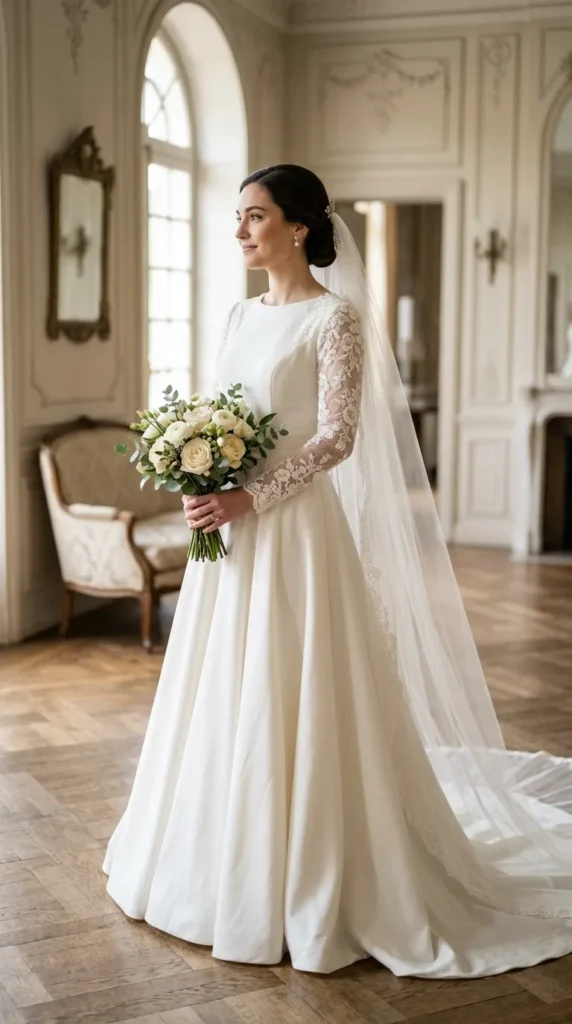
Wedding dresses can have different undertones, including bright white, natural white, ivory, champagne, and soft cream.
Your veil should coordinate closely with the dress.
Bring a fabric swatch or your actual gown when shopping for the veil if possible. Comparing the fabrics under natural light can help you avoid noticeable color differences.
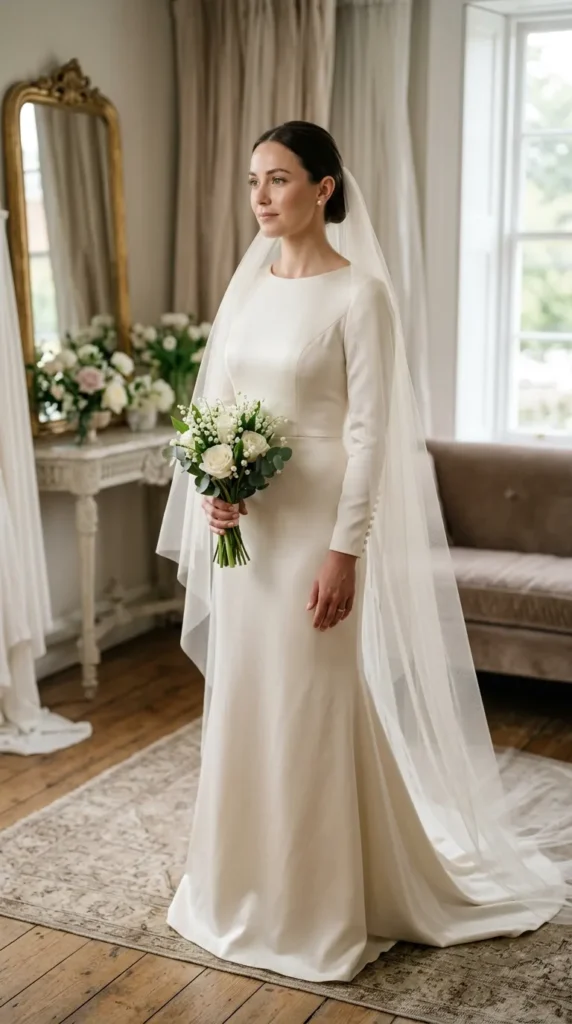
3. Coordinate Lace Without Overmatching
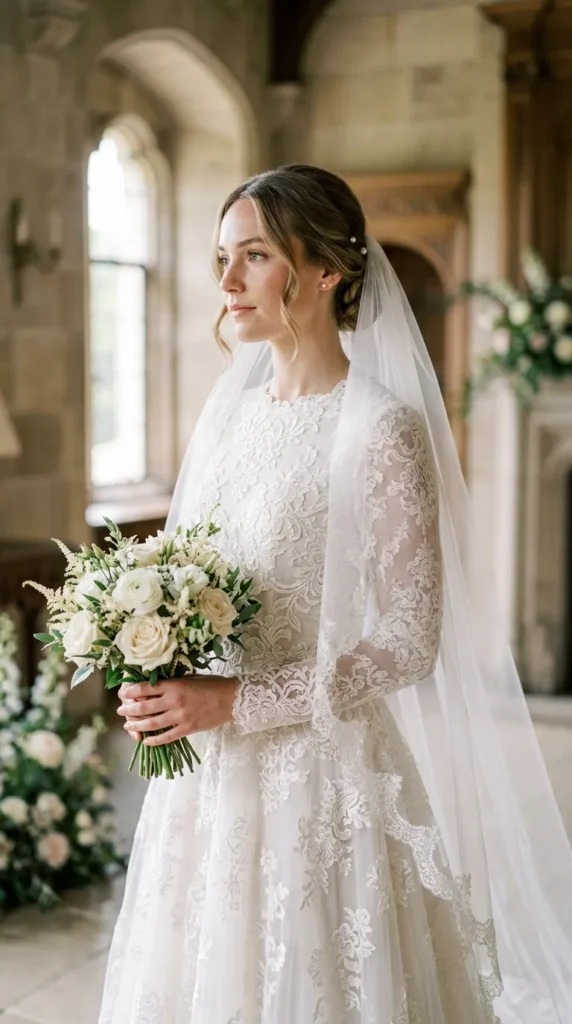
If your dress features lace, you don’t necessarily need a veil covered in identical lace.
Instead, look for a veil with a complementary lace pattern or delicate lace edging.
Repeating the same detail too heavily can make the outfit feel busy.
A simple veil with a subtle lace border may actually allow the gown’s intricate details to stand out more beautifully.
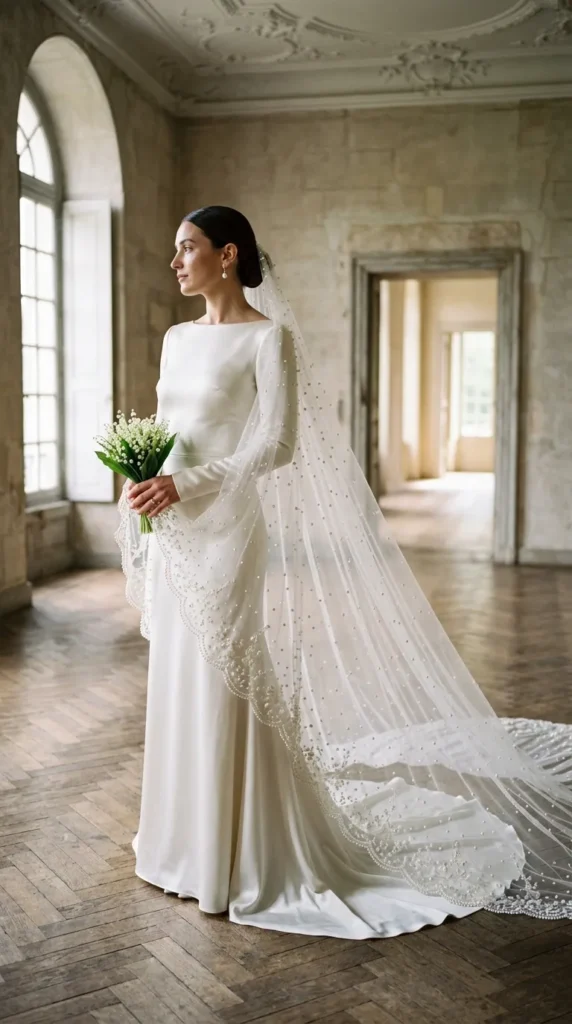
4. Pair a Simple Dress With a Statement Veil
A minimalist wedding dress creates the perfect opportunity for a dramatic veil.
A plain satin gown can look breathtaking with a cathedral-length veil, delicate embroidery, pearl details, or a striking lace edge.
Because the dress is understated, the veil becomes the main decorative feature.
This is a particularly beautiful approach for modern brides who want one unforgettable bridal detail.
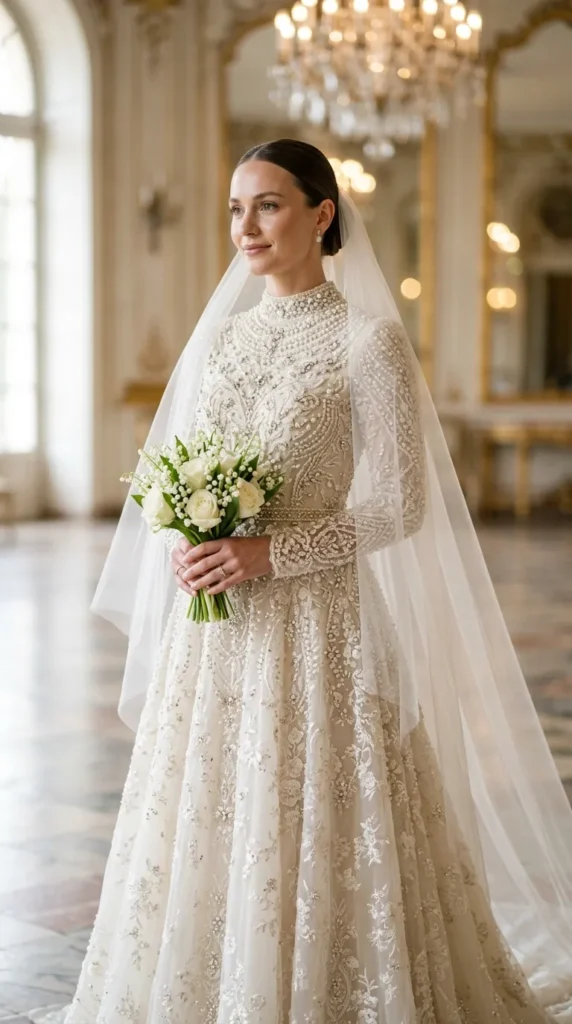
5. Keep an Embellished Dress Balanced
If your gown already features crystals, pearls, embroidery, sequins, or elaborate lace, consider choosing a more restrained veil.
A simple sheer veil can provide softness without competing with the dress.
Alternatively, repeat just one detail from the gown.
For example, a pearl-detailed dress could be paired with a veil featuring a few subtle pearls rather than multiple layers of embellishment.
6. Consider the Dress Neckline
Your neckline can influence both veil placement and style.
Strapless and sweetheart dresses provide an open area around the shoulders, making them particularly versatile for many veil styles.
High-neck dresses or gowns with elaborate illusion detailing may look better with a simpler veil that doesn’t add visual clutter around the neckline.
Try the veil with the actual dress before making your final decision.
7. Match the Veil Length to the Train
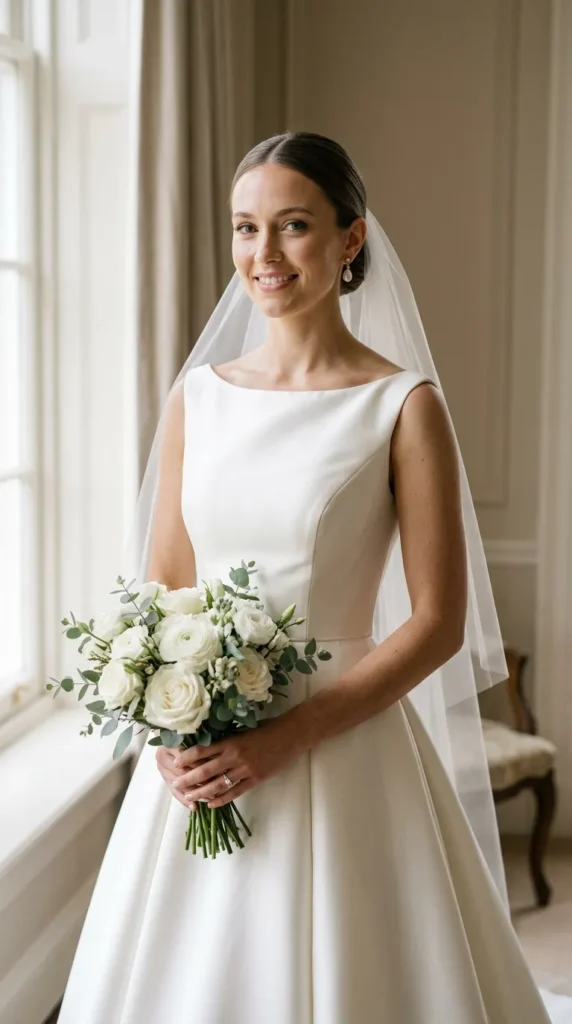
The relationship between your veil and dress train can create a beautiful sense of proportion.
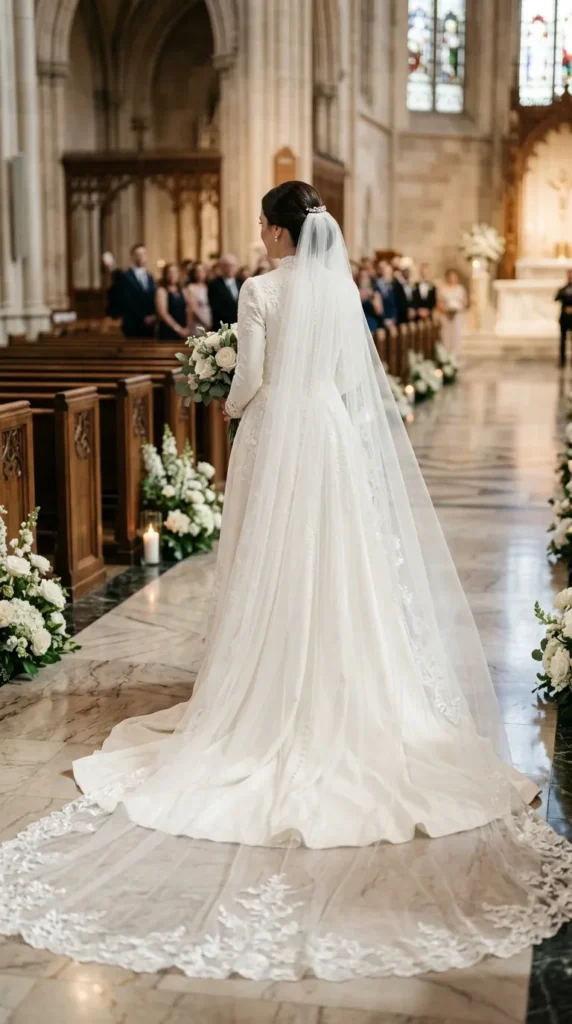
A cathedral veil can complement a long dramatic train, creating a continuous flowing silhouette.
A chapel veil can add romance without overwhelming a dress with a moderate train.
For a gown without a train, a floor-length or fingertip veil can introduce movement and create a more elongated bridal appearance.
There isn’t one strict rule, but the proportions should feel intentional.
8. Think About Your Bridal Style
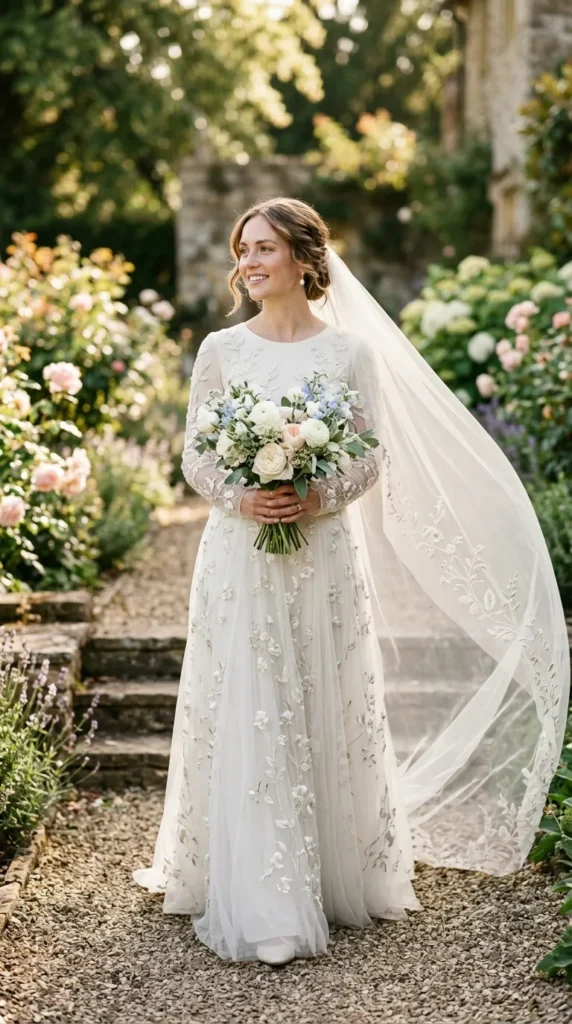
Your veil should reflect the mood you’re trying to create.
For a romantic bridal look, consider soft tulle, lace edges, or delicate floral details.
For modern minimalism, a completely plain veil with clean edges can look incredibly sophisticated.
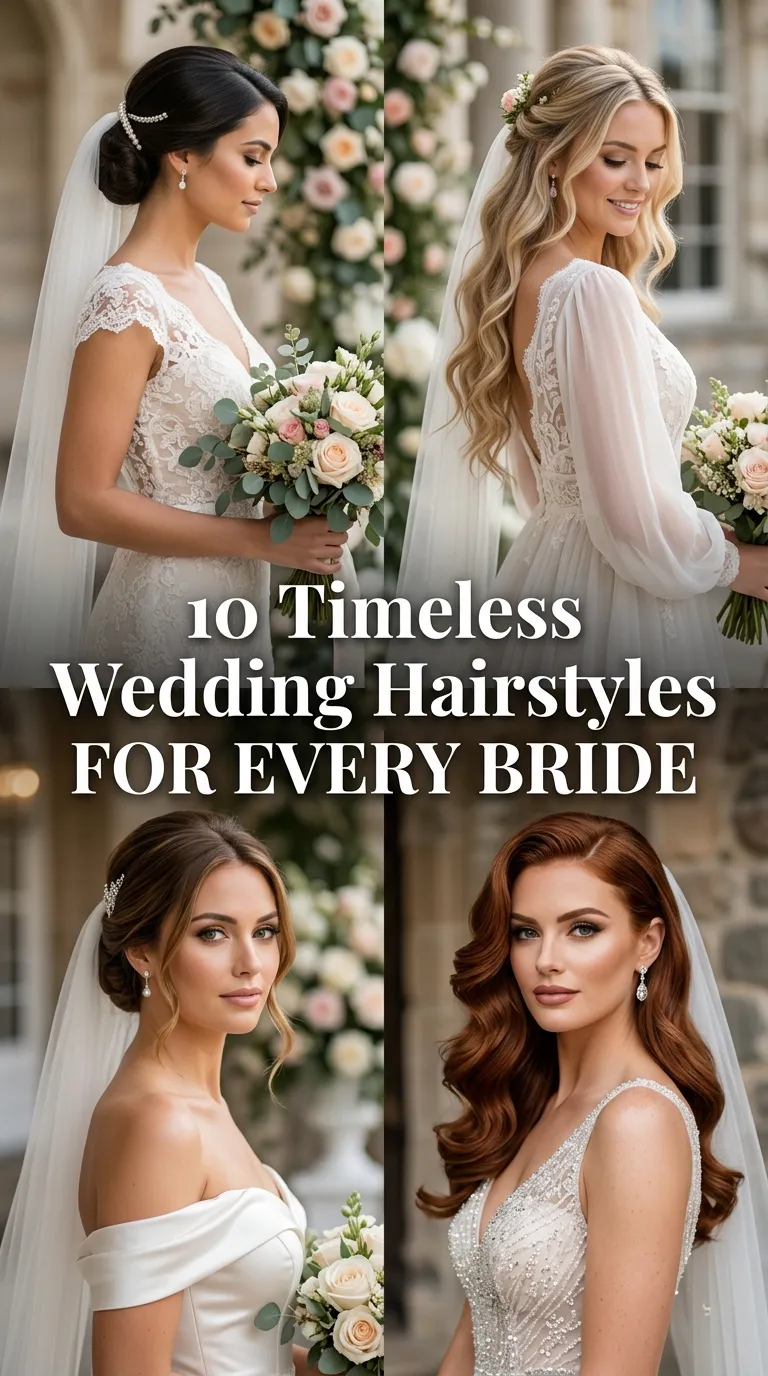
For vintage-inspired styling, explore shorter veils, birdcage designs, or ornate lace.
For glamorous weddings, cathedral lengths, crystal details, and dramatic edging can create a luxurious effect.
9. Consider Your Hairstyle and Accessories
Your veil isn’t styled in isolation.
Think about how it will work with your hairstyle, earrings, tiara, hairpins, and other accessories.
A heavily embellished veil may require simpler jewelry.
If you’re wearing a dramatic tiara, consider a cleaner veil.
If your hairstyle is minimal, you may have more freedom to choose a statement veil.
The goal is to create one cohesive bridal composition.
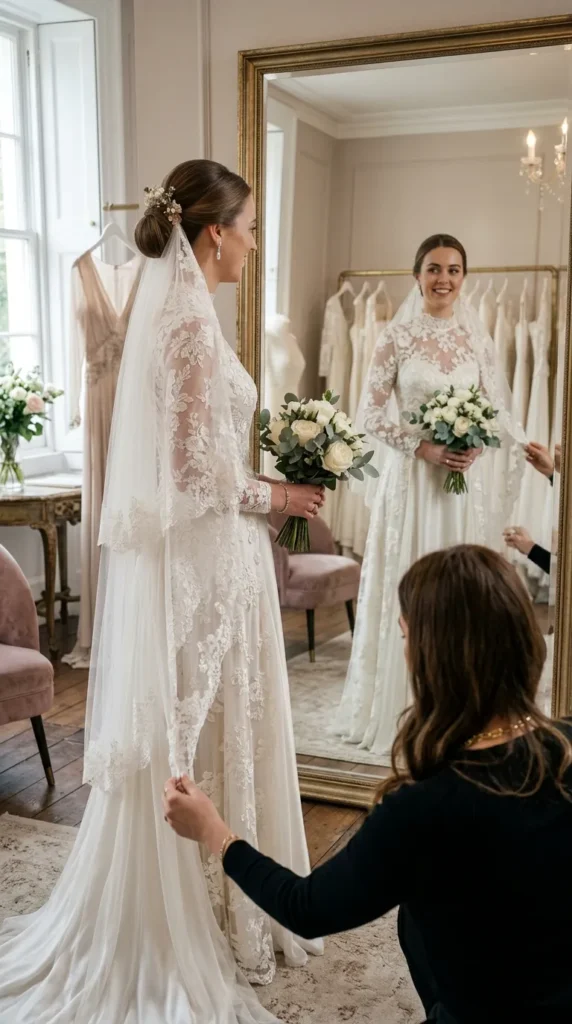
10. Try the Complete Look Before Deciding
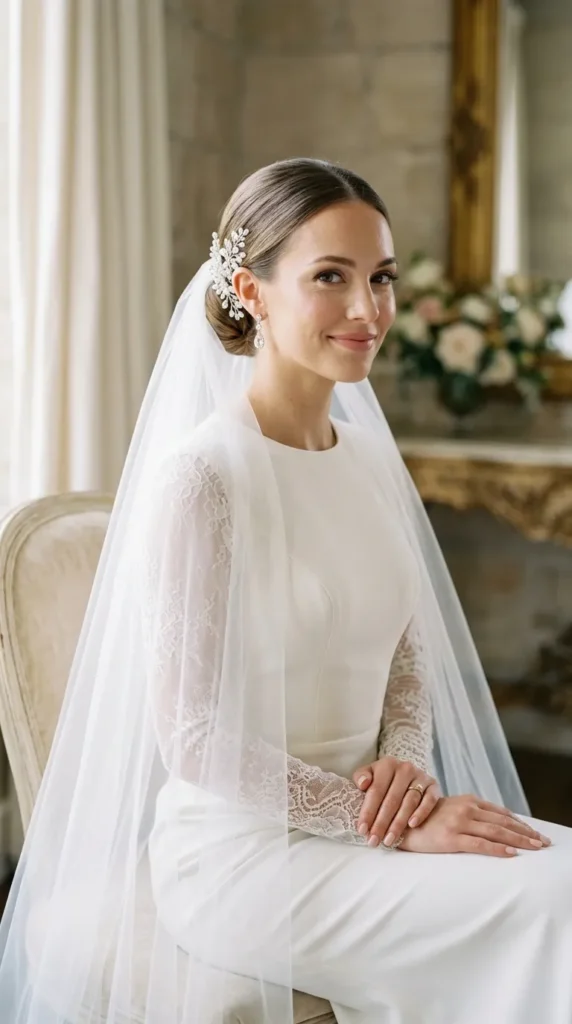
The best way to choose a veil is to see it with everything else.
Wear your wedding dress, shoes, hairstyle, jewelry, and veil together.
Take photographs from multiple angles and look at the complete silhouette.
Pay particular attention to the back because your veil and dress train will create some of your most memorable wedding photographs.
If the look feels too busy, simplify one element.
Sometimes changing the veil—not the dress—is all it takes to create the perfect balance.
Conclusion
Matching your wedding veil with your dress is all about balance rather than exact matching. Consider the gown’s silhouette, color, neckline, train, fabric, embellishments, and overall style before choosing your veil.
A simple dress can support a dramatic statement veil, while an intricate gown may benefit from a clean and understated design. Most importantly, try everything together before making your final decision.
The perfect veil should feel like a natural extension of your wedding dress—adding romance and movement while allowing the gown’s most beautiful details to shine.