How to Make Your Wedding Heels More Comfortable
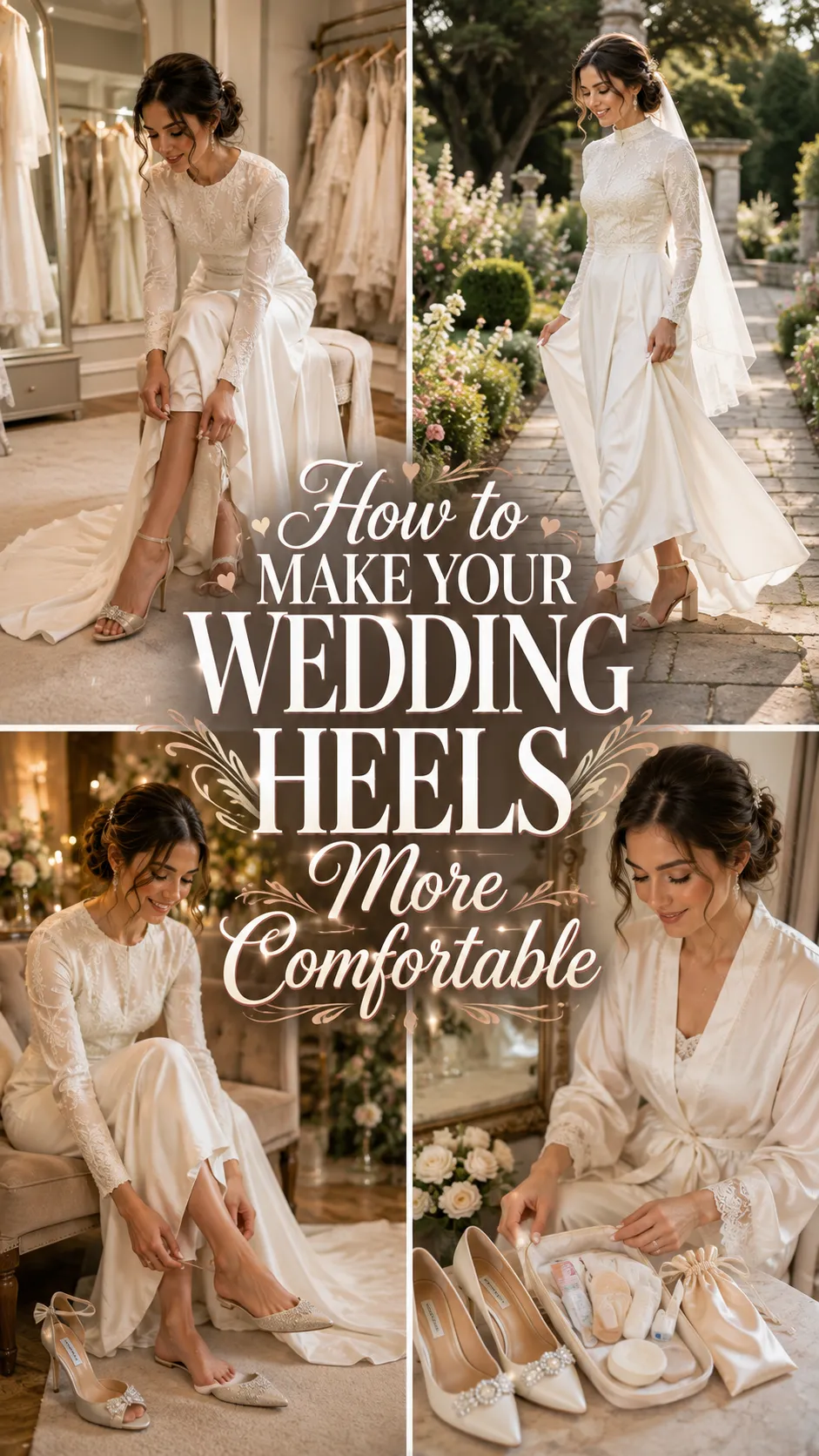
Wedding heels can beautifully complete a bridal look, but standing, walking, posing for photographs, and dancing for hours can quickly turn gorgeous shoes into a painful distraction. The good news is that you don’t have to choose between elegant wedding shoes and comfortable feet.
With the right fit, preparation, support, and a smart backup plan, you can enjoy your heels from the ceremony to the reception without constantly thinking about your feet. These practical wedding shoe tips will help you make your bridal heels more comfortable while keeping your overall look polished and stylish.
1. Choose the Right Fit First
Comfort starts before you buy the shoes.
Your wedding heels should feel secure without squeezing your toes or slipping around your heel. Pay attention to the width as well as the length, because a shoe that is technically the correct size can still feel uncomfortable if the shape doesn’t suit your foot.
Try the shoes on while standing and walk around for several minutes. Your toes should have enough room to move naturally, and your heel shouldn’t constantly slide out.
A beautiful shoe in the wrong size will never become comfortable simply because it’s your wedding day.
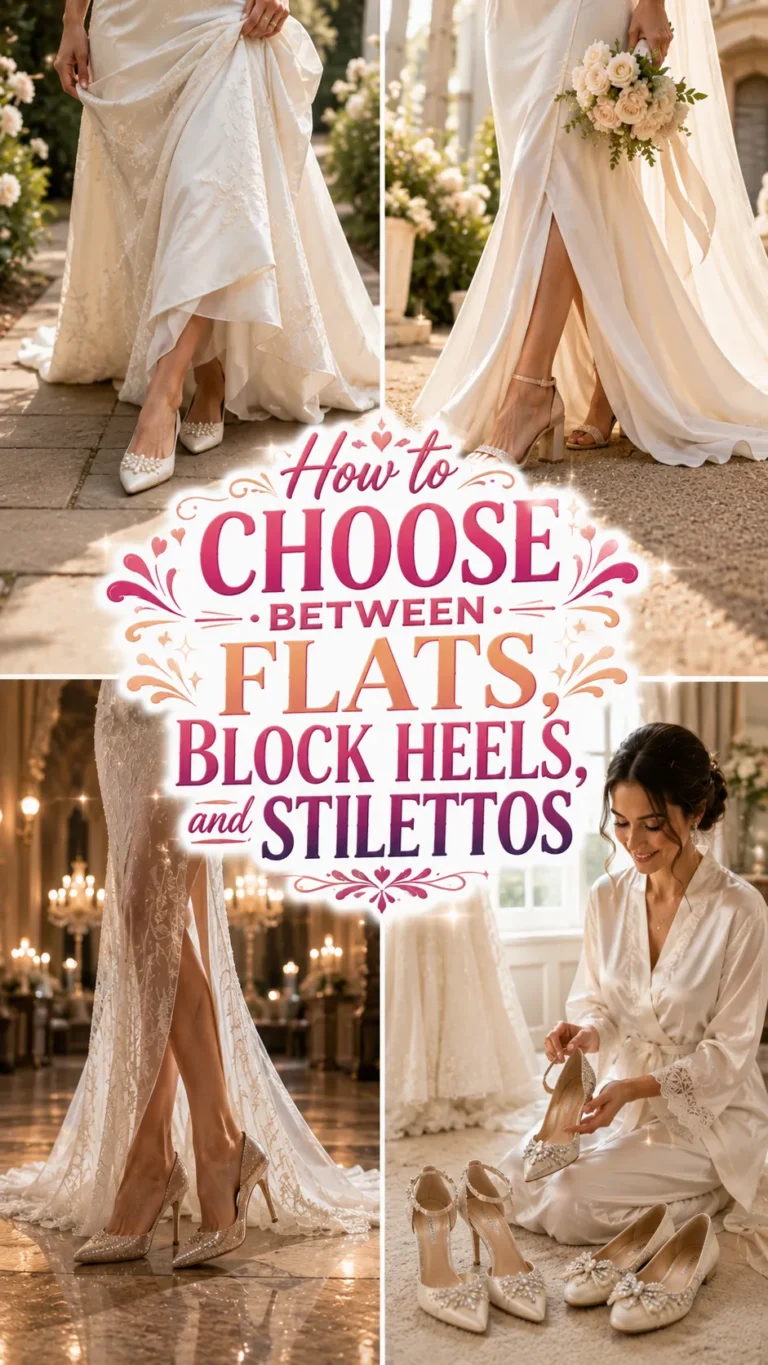
2. Consider a Lower or Chunkier Heel
You don’t need extremely high stilettos to create an elegant bridal look.
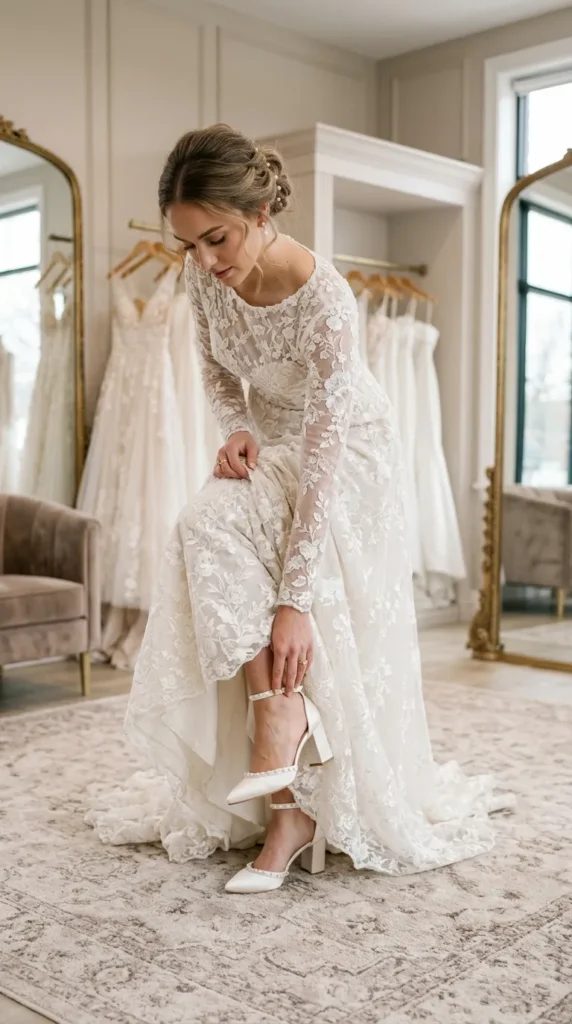
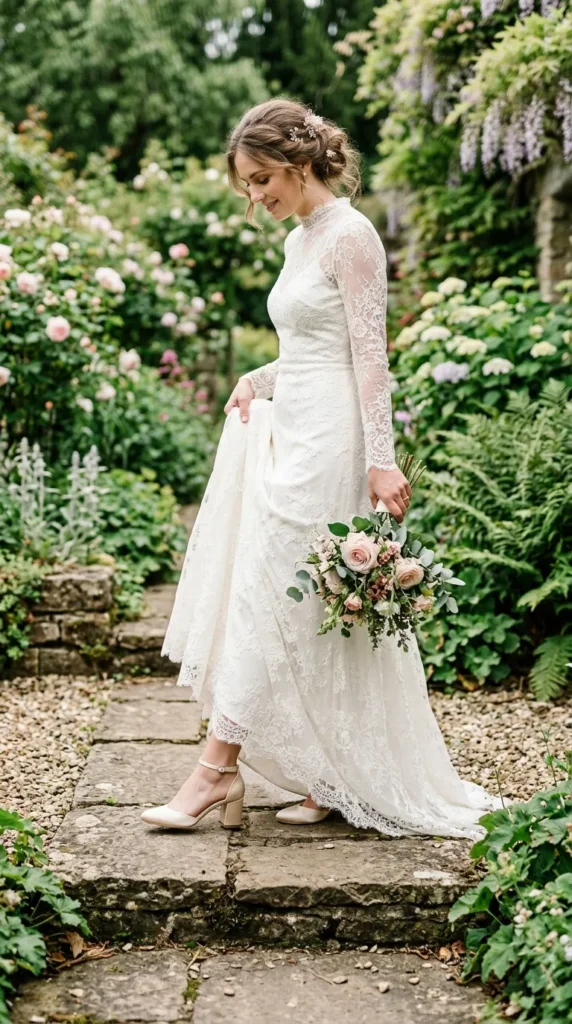
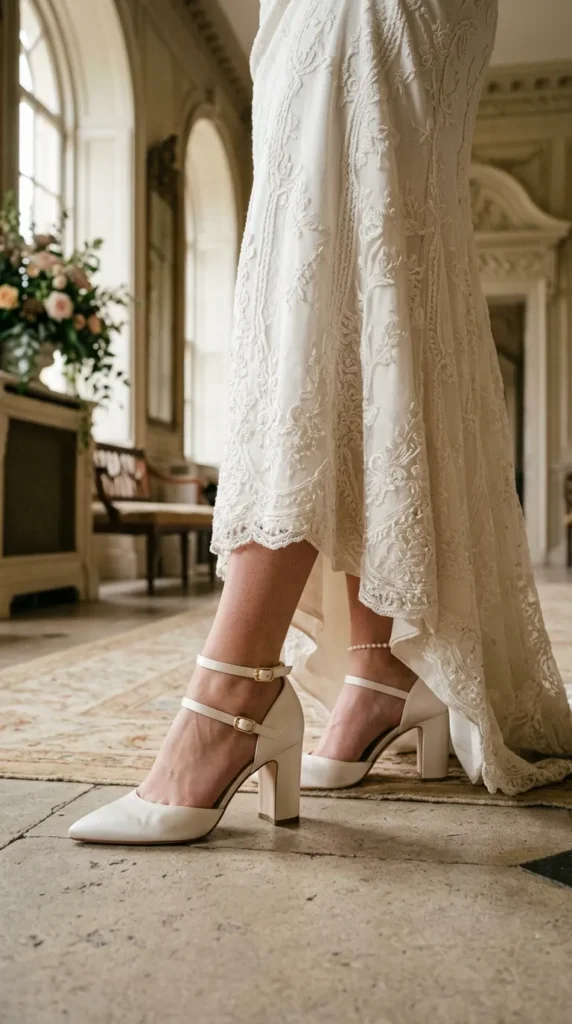
A mid-height heel, block heel, or kitten heel can provide a sophisticated silhouette while offering more stability. Chunkier heels also distribute pressure differently and can make walking on grass, cobblestones, or uneven outdoor surfaces easier.
For an outdoor wedding, a block heel can be particularly practical because it is less likely to sink into soft ground.
Choose the heel height you can realistically wear for several hours—not just the height that looks beautiful in a photograph.
3. Break Your Wedding Shoes In Gradually
Never make your wedding day the first time you wear your heels.
Start wearing them around the house for short periods. Walk, stand, sit, and move around while wearing them so you can identify pressure points before the big day.
Gradually increase the amount of time you wear them.
This also gives the shoes a chance to become more familiar to your feet without exposing you to hours of discomfort all at once.
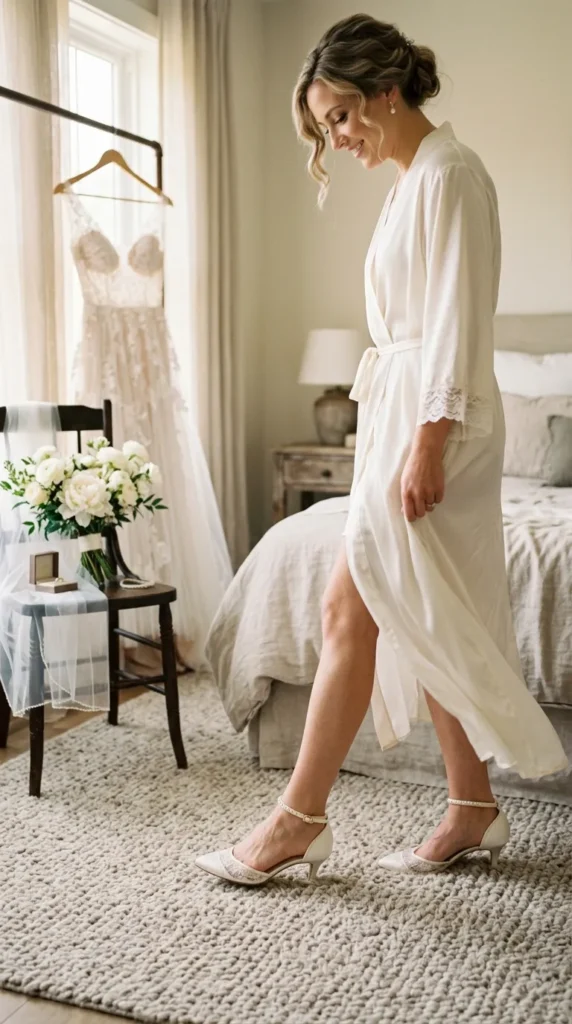
4. Add Cushioned Insoles
A little extra cushioning can make a significant difference.
Depending on the shoe design, consider cushioned insoles or discreet pads designed for heels. They can provide additional support under areas that experience pressure, particularly the ball of the foot.
Make sure any insert doesn’t make the shoe too tight.
It’s best to test the shoes with the inserts well before your wedding so you know they fit comfortably together.
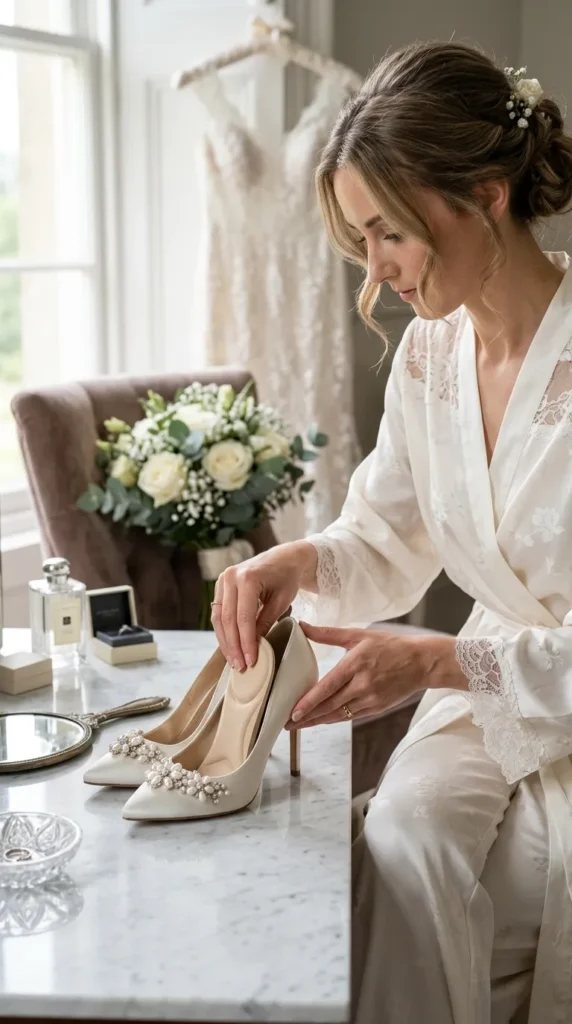
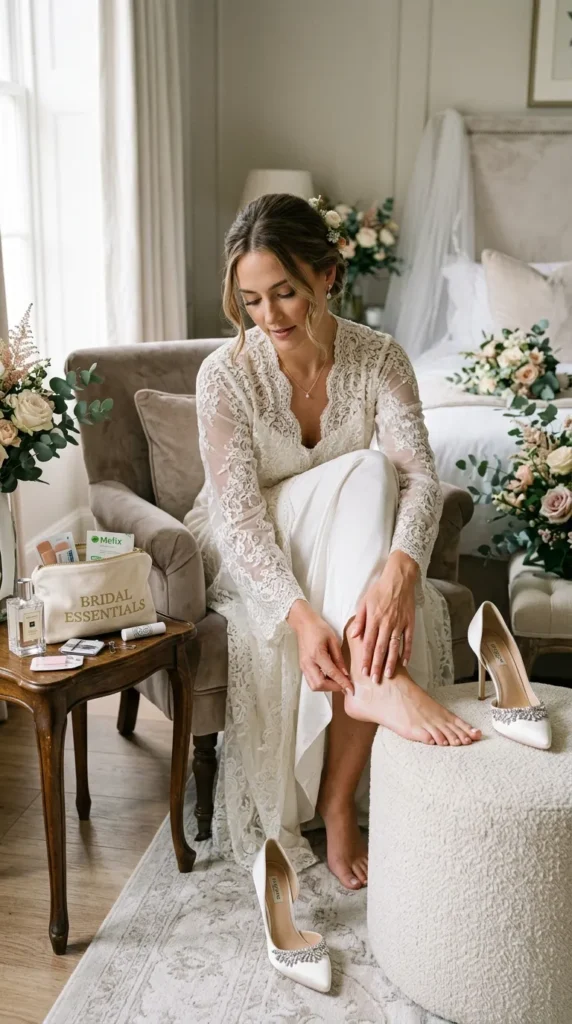
5. Protect High-Friction Areas
Identify the places where your shoes rub before the wedding.
Common areas include the back of the heel, sides of the feet, and around the toes.
Comfort pads, blister-prevention products, or appropriate protective strips can help reduce friction.
Don’t wait until you’ve developed a blister to think about protection. Preventive preparation is much easier than trying to fix painful feet halfway through the reception.
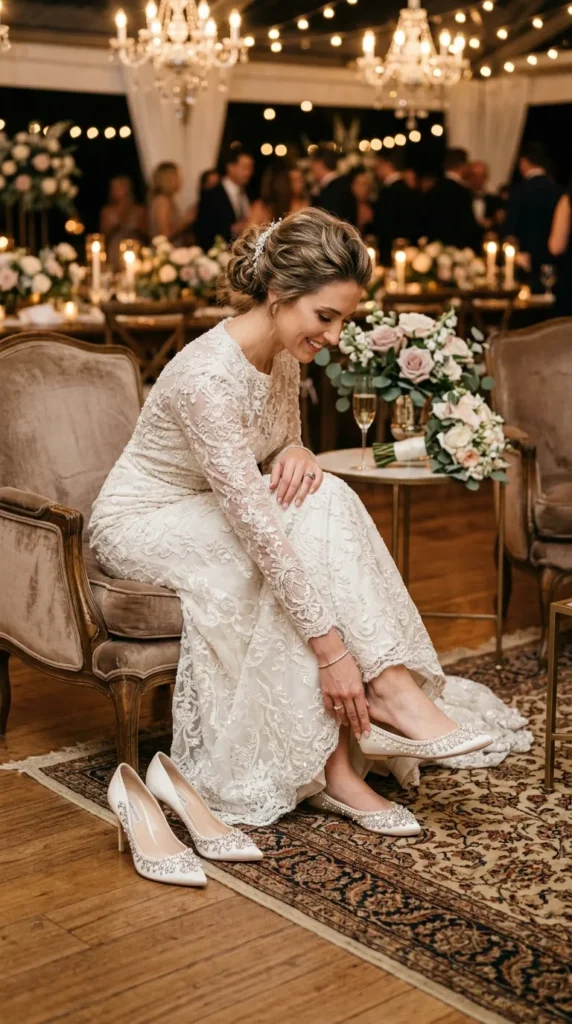
6. Bring a Stylish Reception Shoe Change
One of the smartest bridal shoe tricks is having a second pair ready.
You can wear your statement heels for the ceremony, portraits, and important photographs, then change into elegant flats, low heels, or another comfortable pair for the reception.
Your second shoes don’t have to look casual.
Look for embellished flats, satin slippers, elegant sandals, or polished low heels that complement your wedding dress.
This lets you keep the glamorous footwear moment without sacrificing your ability to dance and enjoy the evening.
7. Think About Your Wedding Venue
Your shoes should make sense for the surface you’ll actually be walking on.
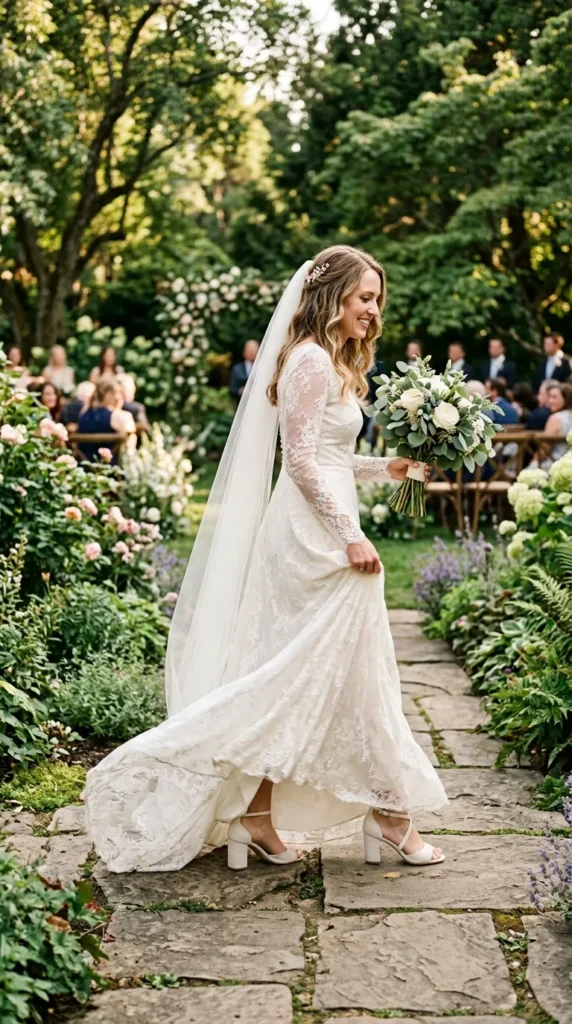
Stilettos may work beautifully on a smooth ballroom floor but become difficult on grass, sand, gravel, or uneven stone.
For garden weddings, consider block heels or wedges. For beach celebrations, elegant flat sandals may be much more practical. For formal indoor venues, you have greater freedom to choose delicate heels.
Your venue isn’t just part of your décor—it should influence your footwear choice too.
8. Don’t Ignore Your Wedding-Day Timeline
A long wedding day means your feet may be working for many more hours than expected.
If possible, sit down during breaks instead of remaining in your heels continuously. Take your shoes off briefly when appropriate, particularly during private moments between events.
Think about how long you’ll be standing during the ceremony, photographs, cocktail hour, dinner, and dancing.
Planning around your timeline can help prevent discomfort before it becomes overwhelming.
9. Choose Materials That Feel Comfortable
The material of your shoes can affect how they feel throughout the day.
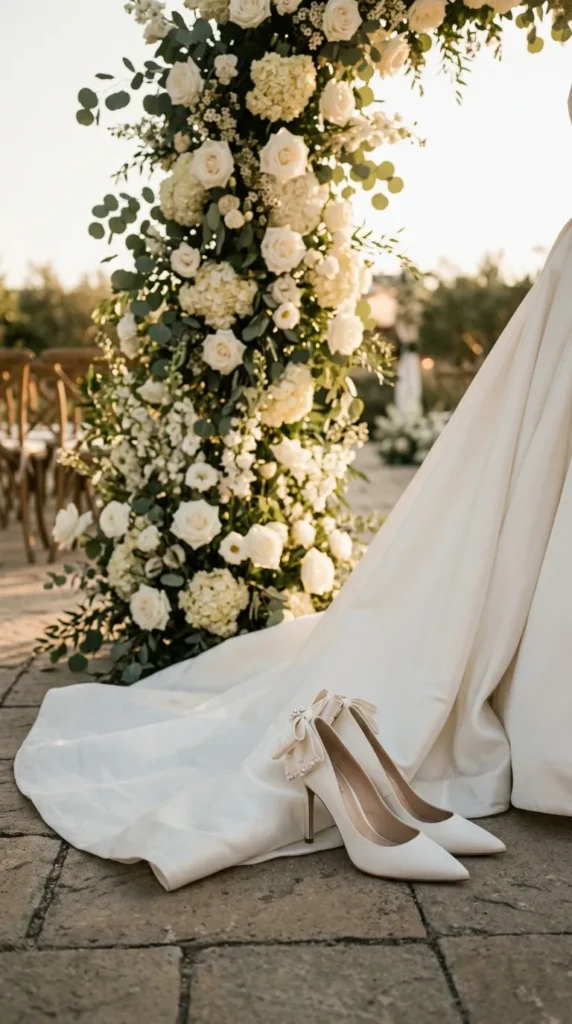
Soft leather, satin, fabric, or other flexible materials may feel more comfortable than stiff materials that don’t move naturally with your feet.
Also consider the season. Closed-toe heels may feel warmer during a summer wedding, while delicate sandals may not be ideal for a cold-weather celebration.
Beautiful design matters, but comfort should be part of the material decision too.
10. Create a Wedding Heel Emergency Kit
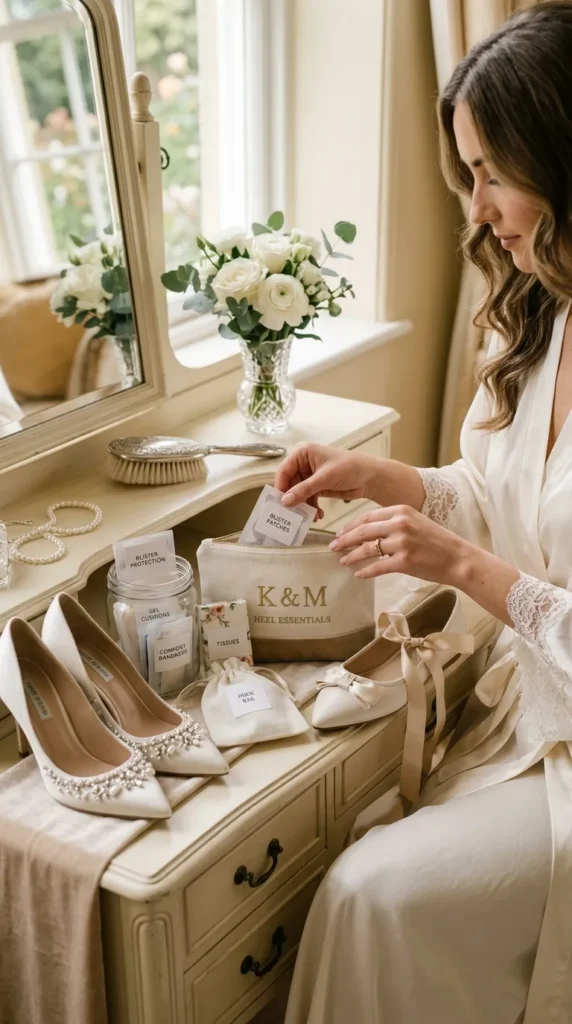
A tiny shoe emergency kit can save your feet during a long celebration.
Consider keeping:
- Blister protection
- Cushioning pads
- A small pack of tissues
- Comfortable backup shoes
- Extra straps or fastening supplies if relevant
- Bandages
- A small shoe bag for changing footwear
Give the kit to your maid of honor, bridesmaid, or wedding-day assistant so you don’t have to search for it while you’re celebrating.
Conclusion
The secret to comfortable wedding heels isn’t simply finding the prettiest pair. It’s choosing shoes that fit properly, suit your venue, match your wedding-day schedule, and provide enough support for hours of movement.
Break them in gradually, add cushioning where needed, protect areas prone to rubbing, and don’t be afraid to switch into a beautiful second pair later in the evening.
Your wedding shoes should help you feel confident—not keep you counting the minutes until you can take them off.